May 12, 2026 · Dakota Gardner
The Most Important Launches Still to Come in 2026
We're almost halfway through the year, but there's an awful lot of meat left on the proverbial bone in spaceflight.

When you take a step back, it’s actually pretty reasonable to conclude that 2026 is the most consequential year for spaceflight in well over a decade. In part, that is due to launches and missions that have already happened, headlined by Artemis II.
But more than that, the thing that is so interesting about 2026 is that it is dominated by extraordinarily significant launches still to come. This includes vehicle debuts, returns to flight, and other curiosities. Interestingly, none of the launches that made my list are crewed — perhaps illustrating the routinized nature (and largely uninteresting profile) of low earth orbit-bound human spaceflight. But that’s a topic for another day.
Today, I wanted to take a look at our global manifest and see what are the most important launches still to come as we head into the rest of 2026. Note, this is entirely subjective and vibes-based. But please, feel free to fight with me as much (or as little) as you’d like.
12. Isar Aerospace “Onward and Upward” — May 2026
It’s kind of amazing to really sit with just how limited Europe has been throughout the history of spaceflight. Much of this is for good reason, but it’s still exciting when a company like Isar Aerospace — based in Germany — decides to try to grab a toehold on the continent for (relatively) domestic launch.
Unfortunately for Isar, their first launch attempt of their Spectrum rocket ended in failure, when the operators lost control of the rocket shortly after liftoff. Following that, previous return-to-flight attempts were scrubbed due to various technical issues.
So, here we are with an anticipated May 2026 launch attempt from Norway, and while it’s not clear the extent to which a second failure would damage the company, it’s fairly obvious (and borderline trite) to say that it would be better to see a success.
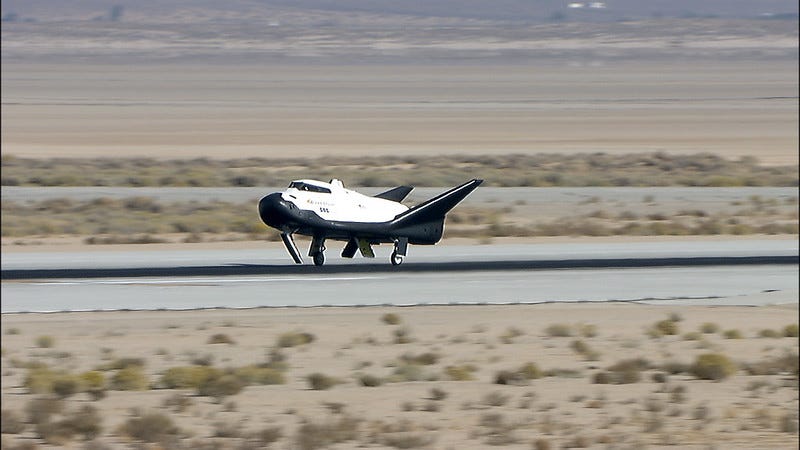
11. Dream Chaser — “Late 2026”
As we say every year: Allegedly, Dream Chaser is flying this year.
Let’s put this in some perspective, shall we? Dream Chaser’s origins trace as far back as 2004. SpaceX was founded in 2002. Falcon 1 flew for the first time the same year Sierra Nevada Corporation acquired the Dream Chaser IP. By the time Dream Chaser flies for the first time, SpaceX will have flown four different vehicle classes (Falcon 1, Falcon 9, Falcon Heavy, and Starship), including dozens of astronauts to the ISS and, indeed, beyond.
All of which is to say, it will be nice to see this thing finally fly, and I look forward to writing this same paragraph next year.
10. Amazon LEO (Several) — Throughout 2026
So Amazon is supposed to have around half of its internet satellite constellation deployed in orbit by the end of July. This year. That’s roughly 1,600 satellites. They’ve currently deployed in the low hundreds and are hoping to have around 700 launched by that deadline (for which they’ve requested an extension).
Leaving aside the question of the extension, Amazon is far behind its main competitor Starlink by basically every metric. To catch up, the firm has bought seemingly every flight it could possibly find: ULA, SpaceX, Blue Origin, you name it.
Even if the company gets an extension, these flights are vital for getting to a carrying capacity of satellites that enables Amazon LEO to really try to go at its competition. Even a single failure is quite damaging in that race, particularly when they’re already so far behind both other firms and regulators’ hopes.
9. Terran R Flight 1 — 2026
God bless Terran 1. The dream of a 3D-printed rocket burned brief but bright — unfortunately, roughly four minutes in fact.
After much drama on the corporate front, the revitalized firm is planning to bring out Terran R this year, its partially reusable heavy-lift rocket. It has an interesting niche in the market, and more players in this space is useful for basically everyone who wants to see more activity both in LEO and beyond.
As with Isar, it’s not clear if a failure on Terran R Flight 1 would be existentially bad for Relativity, but two flights with two failures would certainly not be, you know, good.
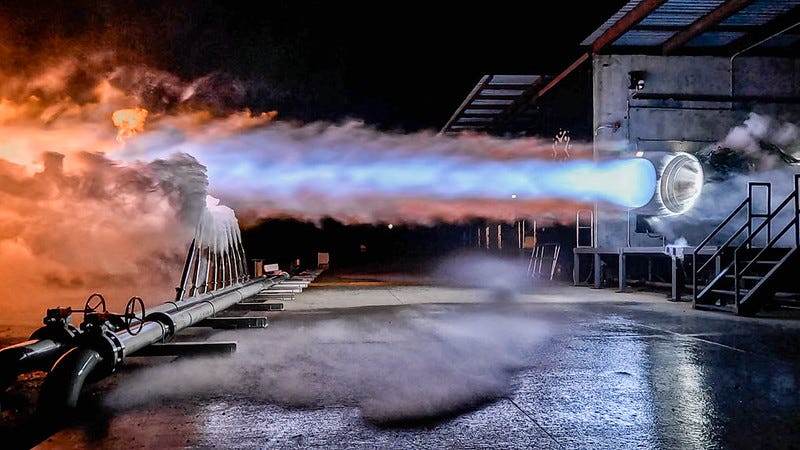
8. Neutron Flight 1 — “Q4 2026”
You would think the stakes for Rocket Lab’s next-gen medium-lift rocket would be higher. After all, sizing up to medium lift would mean the commercial sector’s second-most-successful rocket company could start to address an even larger share of the market.
But the thing about Rocket Lab is that success can sometimes lower the stakes dramatically. A failure of Neutron on Flight 1 would not be devastating for the company. Its Space Services business line would still be flourishing, and Electron flights would continue apace. Obviously no one wants a rocket to fail, but when you have an entire Lab of them, one isn’t that vital.
7. Commercial Lunar Landers — Intuitive Machines IM-3, Astrobotic Griffin, Firefly Blue Ghost — 2026
All three of these commercial lunar payload services contractors have flights planned in 2026 (there’s one additional one which we’ll get to later in this list). And yes, it’s true that each have their differing levels of importance, but I think it’s helpful to think about them collectively here.
The whole theory of the CLPS contract is to do for the moon what commercial cargo did for LEO. And while that theory makes a kind of sense on paper, the reality is that getting to the moon is extremely difficult. The amount of infrastructure, knowledge, and capacity necessary is fairly staggering to consider. And it remains true only a handful of organizations have ever actually delivered on it, a list that notably does not include all three of these companies.
For U.S. lunar ambitions to come to fruition, the cadence of missions successfully reaching the surface needs to increase, and 2026 will be a major inflection point for that.
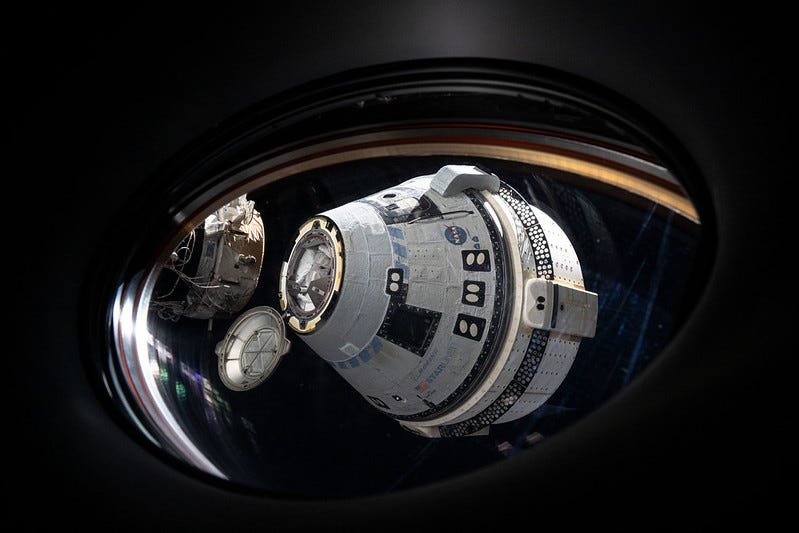
6. Starliner Return to Flight — 2026
[Between writing this and publishing it, we learned that Starliner’s next flight has been (surprise) delayed, potentially until 2027. Oh well, I’m leaving it in because it’s always fun to poke a little fun at Starliner. Also, I just want to point out I was right in that last sentence down there.]
I honestly didn’t know whether to have this much lower or much higher. I could make the case for both, which is why it wound up more or less in the middle.
It’s crazy to consider that after all the back-and-forth over the last 15-ish years, the U.S. still only has one way to get to the ISS. If Crew Dragon is out of commission, there simply is not another domestically run, flight proven vehicle to get astronauts on station. For that reason, it is actually quite important that Starliner’s return to flight go not just smoothly, but swimmingly.
But also, Starliner feels a bit like it’s been more-or-less written off, right? I don’t think too many people are considering it a major part of future NASA mission architecture, right?
So, I don’t know. Perhaps this will slip to 2027 and we can reconsider then.
5. Long March 12B Flight 1
That’s right, we’re kicking off the top 5 with China.
Now, I will refrain from making too many jokes about the resemblance of this partially-reusable, kerosene-powered two-stage rocket with a nine-engine booster to a certain other rocket currently on the launch market. But look, imitation is the sincerest form of flattery, and when you look at which rockets currently dominate the payload-to-orbit leaderboards, I get it.
China having this capability in a commercially oriented (well, at least for the China Model) rocket is sort of interesting, and having a workhorse like this would clearly enable new architectures that the Chinese space sector must at least be thinking about beyond what they currently can do.
We’ll see how it goes, but it seems pretty clear there’s plenty of demand for rockets like this one, and China having one will be quite interesting to track.
4. Starship IFT 13/14
OK, now we’re getting into the somewhat self-evidently important launches, but also, probably the least debatable part of the rankings.
At some point, barring catastrophe (more on that in a moment), SpaceX will attempt to catch both the Superheavy booster and Starship itself following the same launch. That attempt, if successful, will be one of the most consequential moments in the history of spaceflight. No pressure.
The only reason this isn’t higher on the list is that we don’t yet know when specifically that flight will happen. Fingers crossed it’s soon.
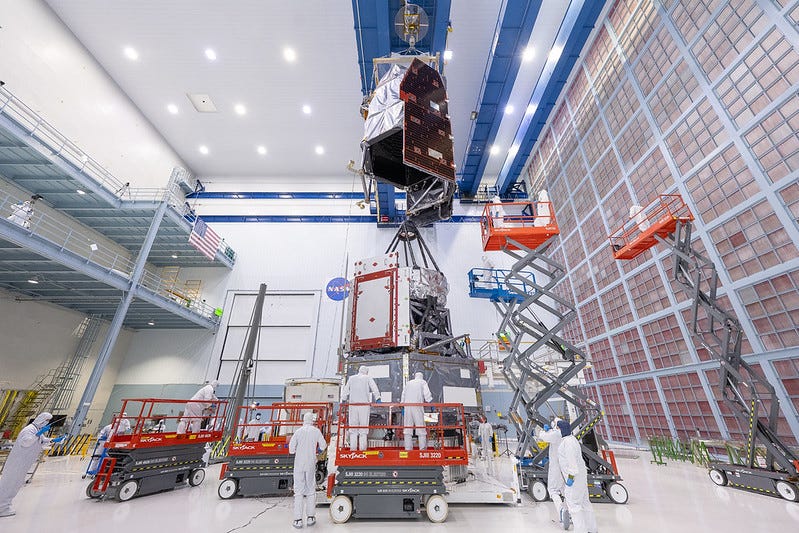
3. Nancy Grace Roman Space Telescope — September 2026
Here’s a fun fact: Once Starship IFT-12 flies, Starship and Falcon Heavy will have flown the same number of times. Who would have guessed that in 2018?
I’m not entirely sure what that says about the economic viability of heavy launch at the moment, but let’s not interrogate such questions today. Falcon Heavy is something to be appreciated every time we’re fortunate enough to see it, and two in one year would be quite lovely given the relative dearth of launches it’s had over the last 18 months.
The telescope itself is interesting, particularly in that it is largely focused on questions of dark energy and the big questions surrounding the history of the universe. And everyone loves a new, big space telescope, right?
So this one is No. 3 in part because of the rarity of Falcon Heavy itself, but also because a failure resulting in the loss of the telescope would be quite, quite bad.
2. New Glenn Return to Flight
Here’s a half-baked take: Starship is the most important rocket of the 21st century, but New Glenn is the most important rocket of the 2020s.
I’ll explain: SpaceX is more or less the only game in town at the moment for a certain scale of spaceflight. They’ve come quite close at times to feeling like an honest to goodness monopoly on commercial launch. Rocket Lab and ULA are both successful, but both are more niche products that aren’t really playing in the same sandbox as Falcon 9. Maybe others get there soon — including some of the ones we’ve mentioned so far — but maybe they won’t.
And so the only real competition SpaceX experiences is at the other end of the launch spectrum: The big stuff. And the biggest and most obvious competition of all is the race to land astronauts on the moon.
New Glenn must return to flight, and do so successfully, for Artemis III to fly on time and for Blue Origin to be a major part of that conversation with its Blue Moon lander. That’s not to mention the myriad other commercial missions manifested on the rocket, including — you know — Amazon LEO.
If New Glenn suffers another failure on its next flight, that would be disastrous for Blue Origin, but also to the idea of anyone really pushing SpaceX in a significant way.
1. Starship IFT 12
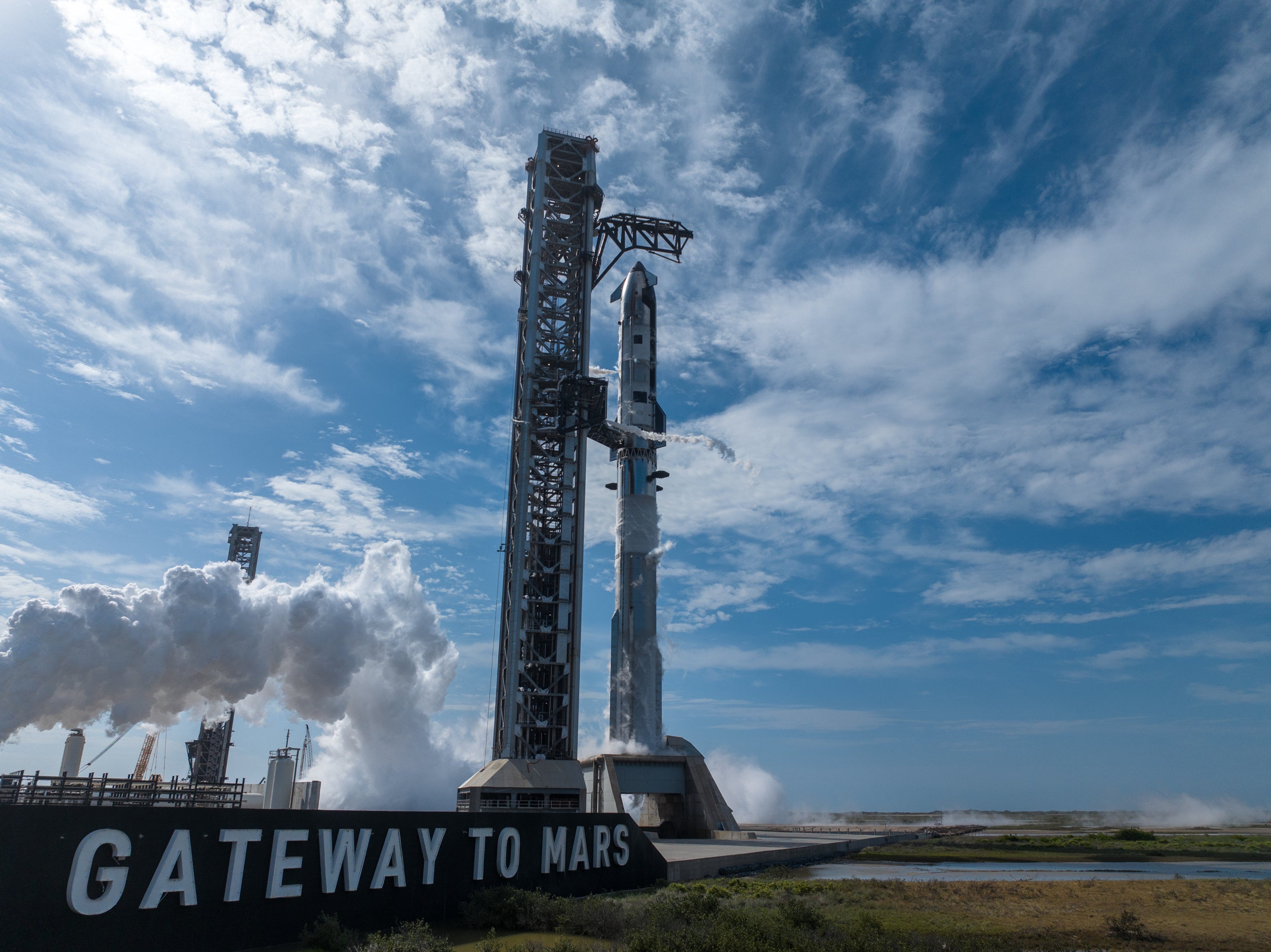
The importance of the first flight of SpaceX’s Version 3 Starship cannot be overstated.
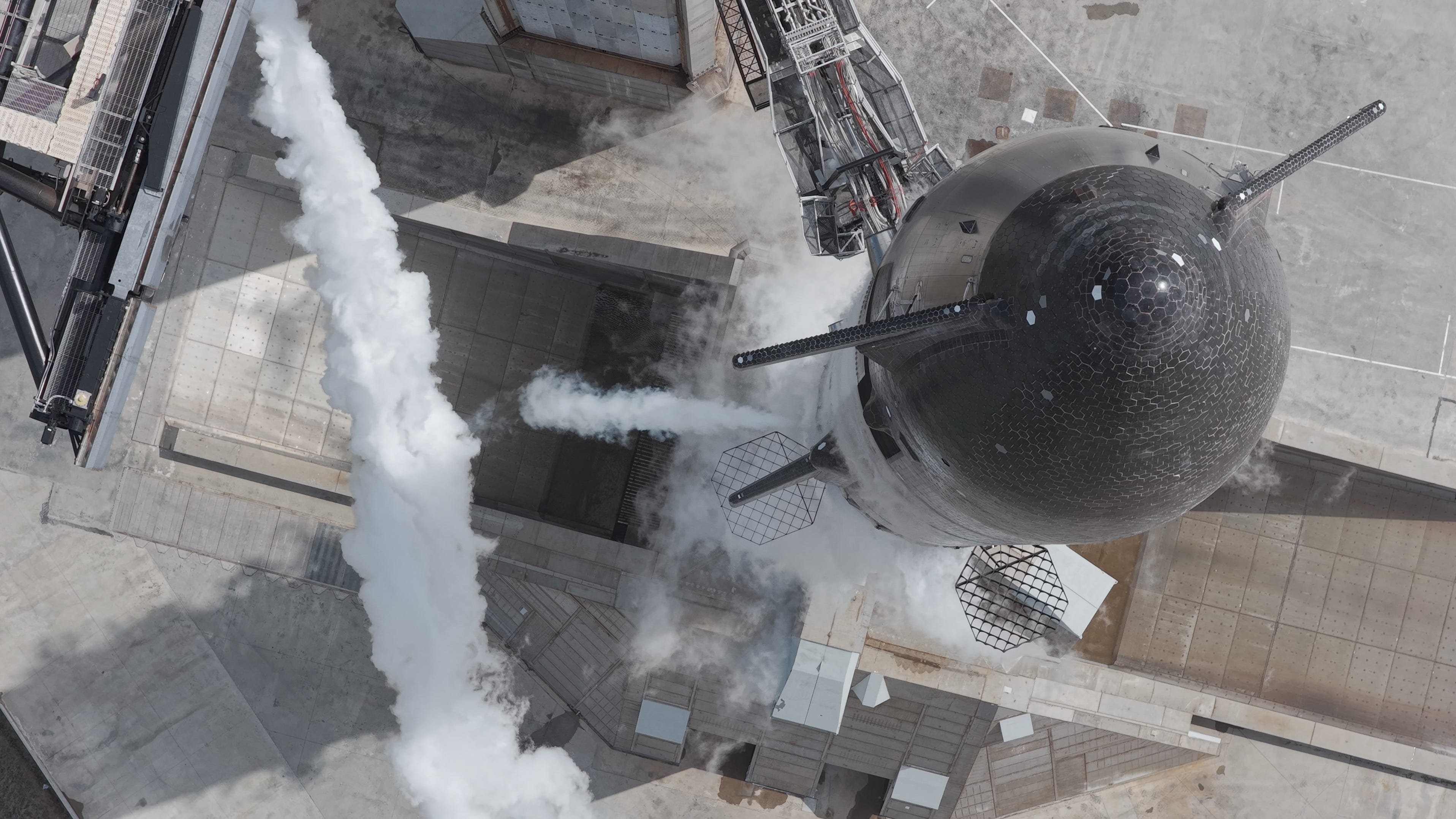
Raptor 3 looks dramatically different from Raptor 2. The booster and ship designs are significantly different as well. We’ve seen an entirely new ground system developed to support Version 3 (and beyond), and we’ve seen multiple failures of both the Version 3 rocket hardware in testing as well as those ground systems themselves.
The stakes simply could not be higher. Much of the hardware for future Version 3 test flights has already been built. Many of the systems have already been designed and implemented. A major failure requiring a course correction could set the program back months if not years. And as we saw with Version 2, even minor failures can have unexpected and cascading impacts.
Version 3 has been decidedly un-SpaceX. They’ve tested, and tested, and tested some more. They’ve been very, very careful not to fly hardware that they’re 100% not confident in this time. That’s a bit different than the “excitement guaranteed” ethos of IFT 1.
SpaceX is massive. Its scale can sometimes block out the sun in the discourse. The IPO, the Elon of it all, the boundless vision and the technical possibility — these things all more or less come to a head with this one specific flight. Success doesn’t necessarily change everything, but failure sure might.
I guess the excitement guaranteed era is still with us for the time being.
Originally published on Substack ↗ · Subscribe to J Mission