May 29, 2026 · Dakota Gardner
Was this the Most Consequential Week in Commercial Spaceflight?
A mitigated success for SpaceX and an unmitigated disaster for Blue Origin have shifted the vibes once more. Who'd have guessed SLS would be the reliable piece of Artemis?
Flashback a couple of years and the last five months would have seemed more or less impossible to imagine in the world of spaceflight.
Consider: In that period, we’ve seen NASA Administrator Jared Isaacman excoriate Boeing for its Starliner boondoggle and cancel the Lunar Gateway. We’ve seen Artemis II fly a flawless mission that captured the imagination of the general public. And we’ve seen the core stage for Artemis III begin the process of stacking ahead of a planned launch next year.
Compare that to the world of the commercial partners, which up until recently had been the ones putting the pressure on NASA to get its act together. SpaceX had multiple test failures in that span, pushing back its 12th test flight of the full Starship system well into 2026. Blue Origin had a failed second-stage lead to a brief delay in its own already-limited launch cadence, subject to a mishap investigation.
That was already the mood music heading into the last week. I even said that SpaceX IFT 12 and Blue Origin’s next New Glenn flight would be the most consequential missions of 2026. I think that prediction turned out to be correct, but unfortunately, it wasn’t in the way I was hoping.
Let’s start with SpaceX.
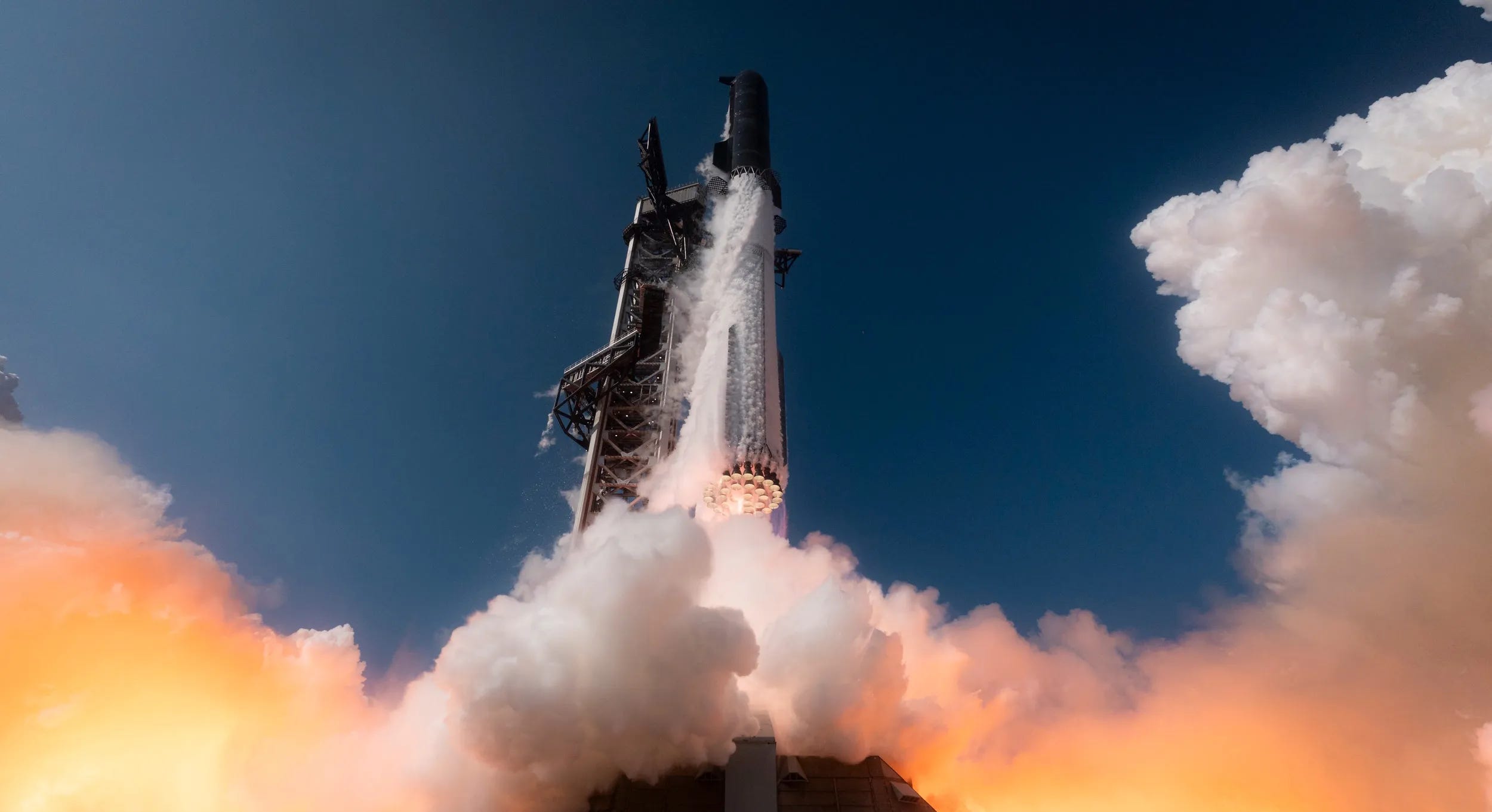
I am still planning to do a review of IFT 12, so stay tuned for that to come. But it’s impossible to talk about what happened with Blue Origin without first setting the stage with IFT 12.
After a fairly bumpy Version 2 test campaign, SpaceX clearly had high hopes for Version 3. They tested multiple constituent components of the rocket and booster to failure (intentional or not), and the timing of IFT 12 in the glow of the firm’s S-1 filing ahead of a planned IPO meant they clearly wanted this to be a fault-free mission. And, depending on your perspective, it went decently well.
Though the Booster failed to attempt a simulated landing, the Ship managed to complete its planned mission nearly in its entirety (skipping out on in-space relight of its engines due to an engine-out condition on the ride up). I don’t work for SpaceX, so I have no idea how well the Ship survived re-entry, but from what we could see on the feed, it didn’t seem particularly worse for the wear.
And so there’s a story you could tell yourself that says hey, sure the Booster didn’t really work as planned, but that’s OK: It basically was an expendable version. Moreover, SpaceX are the best company on earth at first-stage recovery. If there’s anything you’d expect them to figure out, it’s that.
The glass-half-empty interpretation is of course that despite all the testing, neither component performed as planned, and the Ship is not yet ready for an orbital test. Years into the program, and after 12 flights, Starship still has not reached orbit.
This matters because, of course, Starship is one of the planned lunar landers to support NASA’s Artemis architecture. In order to be ready for a planned Artemis III launch next year, SpaceX will need to produce a crew-capable version of Starship that can refuel in space. We’re nowhere close to that.
And so, with the rorschach test of IFT 12 in the rear-view, eyes turned to Blue Origin to maybe be the provider able to recreate Apollo 9 next year.
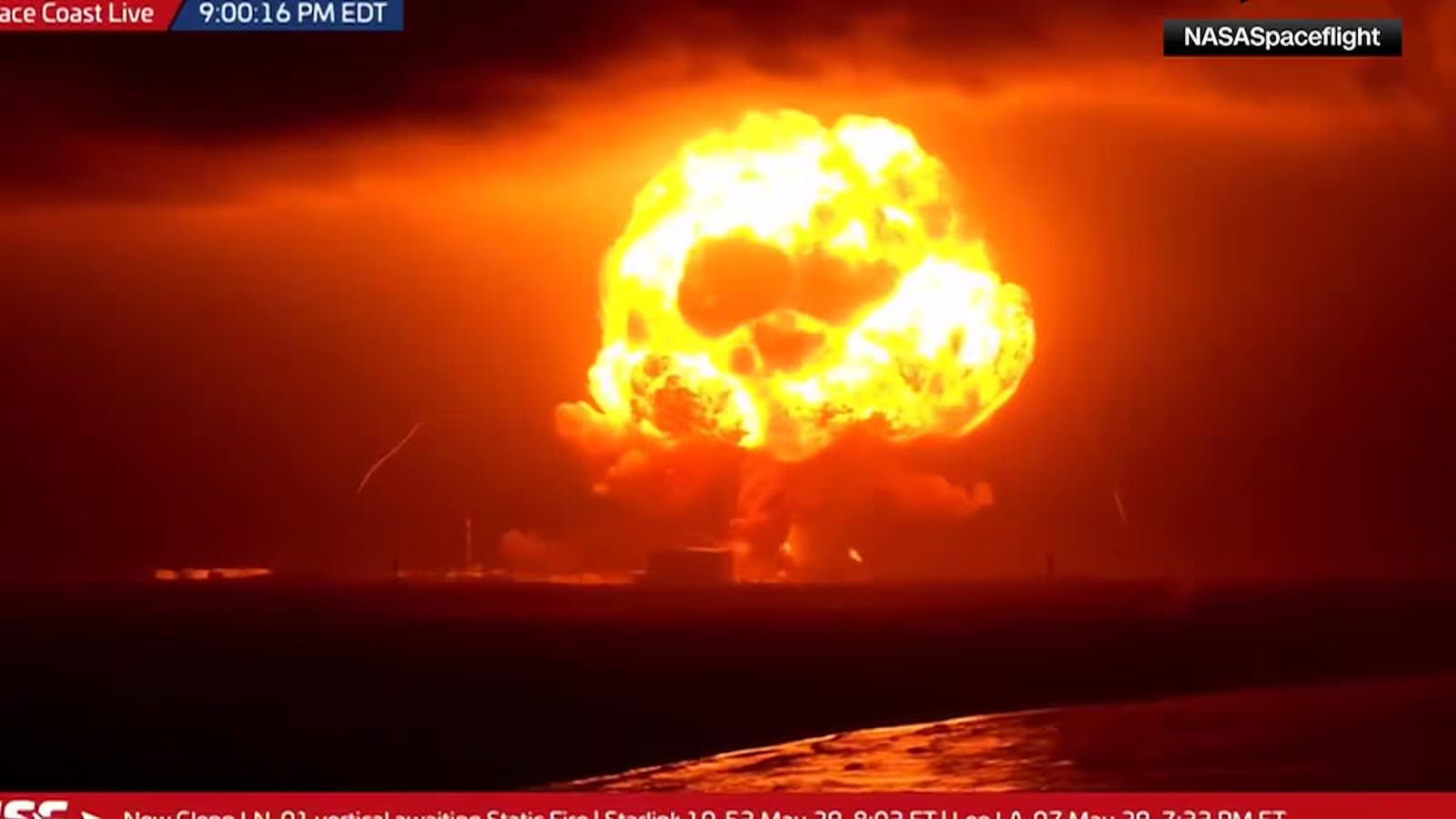
Which brings us to yesterday’s New Glenn static fire anomaly.
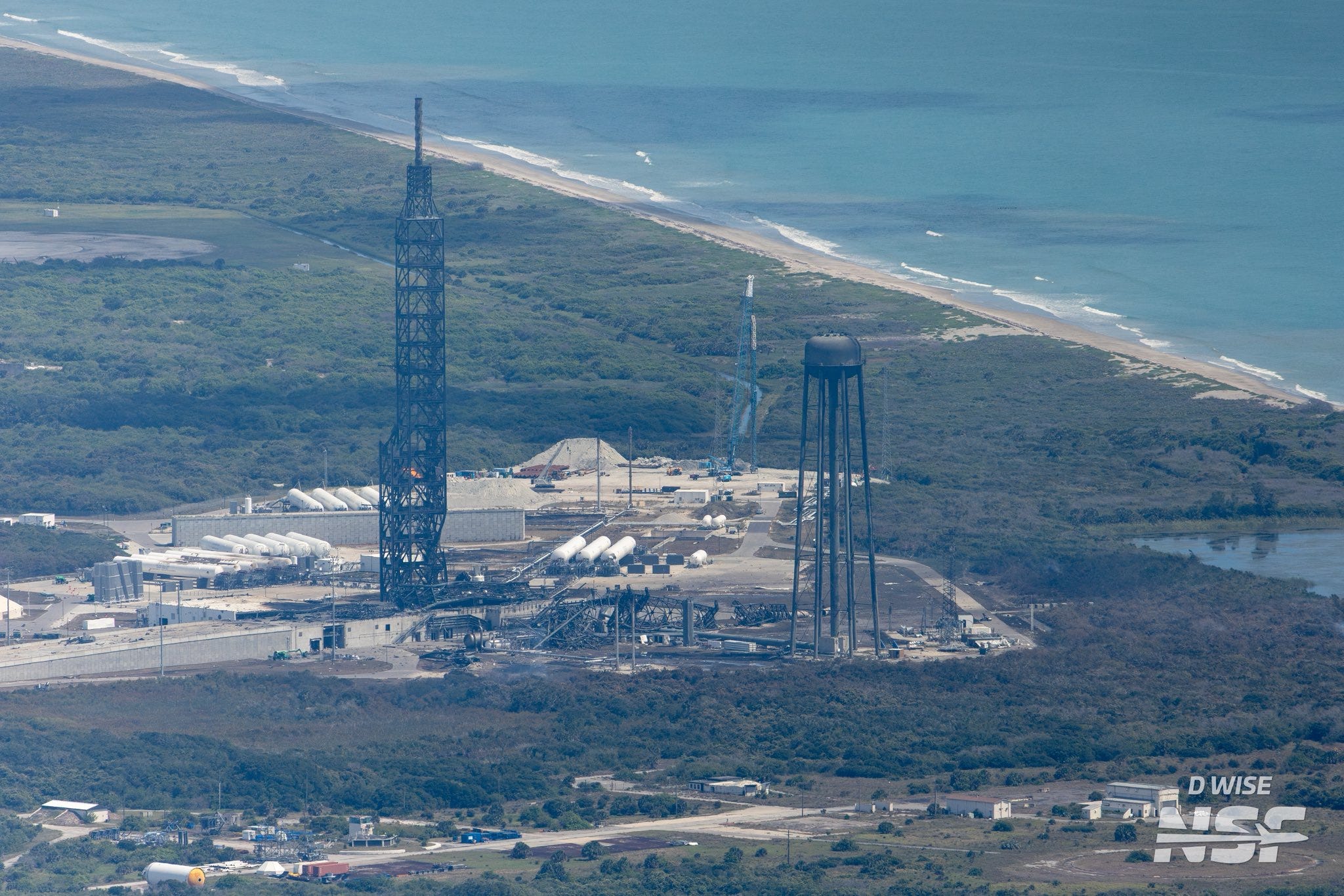
I can’t remember seeing an American rocket explode like that. I’d be willing to bet you can’t either. It didn’t just destroy the rocket; it also destroyed much of the pad infrastructure. We don’t yet know the extent of the damage, but it was so severe and so demoralizing, best-in-the-business Eric Berger is reporting Blue Origin may just scrap this edition of New Glenn entirely and move on to its next, larger 9x4 model.
Which means that, barring some creative thinking (more on that in a second), SpaceX and Blue Origin aren’t just nowhere near being able to provide a usable lander for Artemis III – they’re further away than they were a week and a half ago.
The mood among space enthusiasts was pretty dire in the immediate aftermath. Statements from Isaacman and Blue Origin founder Jeff Bezos were muted and funereal. Collectively, we all sort of came to the realization at the same time that we’re probably not landing on the moon in 2028.
I don’t think anyone really thought both flights would be a massive, unmitigated success. I certainly didn’t. But I also don’t think anyone had “explodes during a static fire test” or “still-not-go for an orbital attempt” on their bingo cards. Space is hard, as the cliche goes. But I don’t think many of us really expected it to be quite this hard after all this time.
And so, for further proof of our collective state of mourning for Artemis III’s 2027 launch date, we’ve entered the bargaining phase.
Almost immediately, commentators started debating whether or not Blue Origin’s Blue Moon Mk. 1 lander could fit onto a Falcon Heavy. While that seems like a fanciful notion teleporting in from an alternate dimension where Elon Musk and Jeff Bezos have no egos, I suppose anything is possible.
Really, though, we’re all just casual observers in all of this. We cheer these companies on because they re-ignite the dreams we had as kids that we’ve all felt fade in some way over the years. But it’s hard not to feel for the people at Blue Origin today, who saw years of work go up in smoke in the black of night at Cape Canaveral.
Rebuild, refocus, and reload. We’ll be watching and cheering when you do.
(Imagery courtesy NASA Spaceflight and SpaceX. Go subscribe to NSF if you haven’t yet — how’d you find your way here if you haven’t?)
Originally published on Substack ↗ · Subscribe to J Mission