Jun 20, 2026 · Dakota Gardner
Who Will be the First Woman on the Moon?
We now know a woman won’t fly with Artemis III, but what of the big one: Artemis IV?
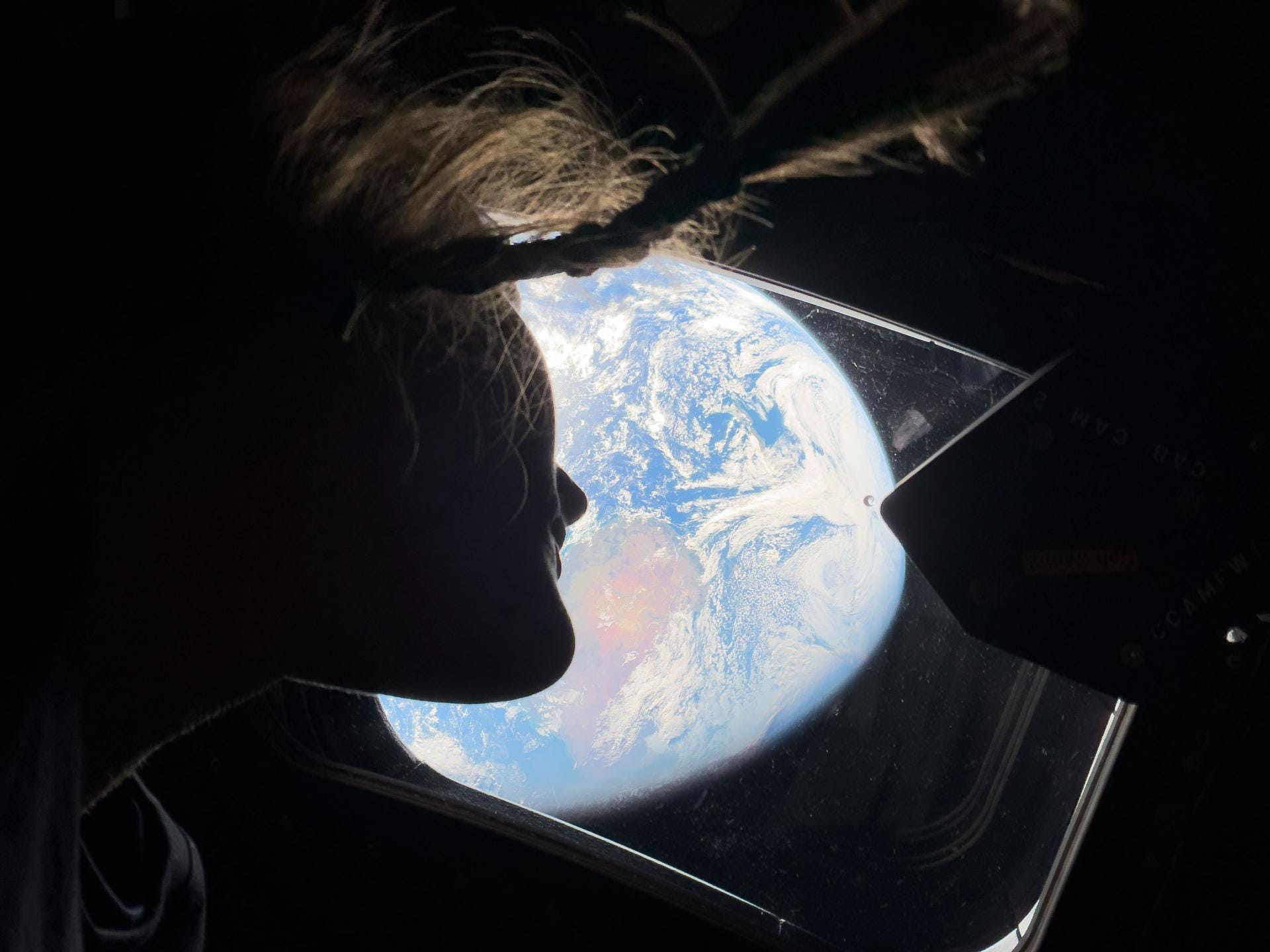
After NASA formally announced the Artemis program we know today in 2019, it committed to – as part of the planned moon landings – sending the first woman to the lunar surface. In 2021, that was amended to also include the first person of color to walk on the moon. However, that promise has since been removed from NASA’s website.
There has been much discussion of this development in the aftermath of the Artemis III crew announcement, which featured no women in what was a relatively unusual assignment for modern NASA. Administrator Jared Isaacman demurred, noting that his private missions had featured a 50% gender split for crew, and that NASA determined this crew would be best equipped for the job. Crucially, in his statement, he also implied other crew weren’t eligible for this mission due to the fact that they’re already in training for a surface mission. OK, sure.
Regardless of Executive Branch politics, I personally find it hard to believe the U.S. won’t send a woman to the lunar surface on Artemis IV. There are quite a lot of reasons for this, but the most notable one is that the U.S. is currently in a race to the moon with China. For half a century, America has been able to point to the first man on the moon as a point of national pride. To lose out on that opportunity to China, who may choose to send a woman to the moon on their first crewed mission – echoing the Soviet Union space program’s greater gender parity – would be a tactical error. I think NASA probably knows that.
So let’s assume there will be at least one woman on the Artemis IV crew.
I say at least one because there’s another interesting wrinkle: There will potentially be a European Space Agency astronaut on board, and there are a handful of notable ESA astronauts who are women. Now, as part of the Artemis architecture, only two of the four crew will make the actual lunar landing, and it’s hard to imagine NASA would select the ESA crew member to do so on this first return to the surface. So, even if the ESA crew member is a woman, it seems unlikely she’ll be the first woman on the moon.
With all that in mind, NASA maintains its list of active astronauts who are eligible for crew selection on its website. In 2020, they announced a smaller pool of Artemis-specific astronauts, but interestingly, they’ve since walked that back and said that any active astronaut is eligible.
So, let’s take a look and see if we can’t try to do some tea leaf reading.
To be clear, this is all wild speculation and I will almost certainly be wrong. However, I think it’s neat that the first woman on the moon (at the very least, the first American woman on the moon) is on this website right now.
In order to form my list here, I started by looking at the crew selection for Artemis II. NASA announced the now-iconic team of Reid Wiseman, Victor Glover, Christina Koch, and Jeremy Hansen in April of 2023. Koch was originally selected in the 2013 Astronaut Class, so we’re going to target crew who have roughly ten years of experience as a professional astronaut (with one exception). As great as the newer classes are, I suspect NASA will reward experience.
With all that in mind, here’s the list, organized in tiers:
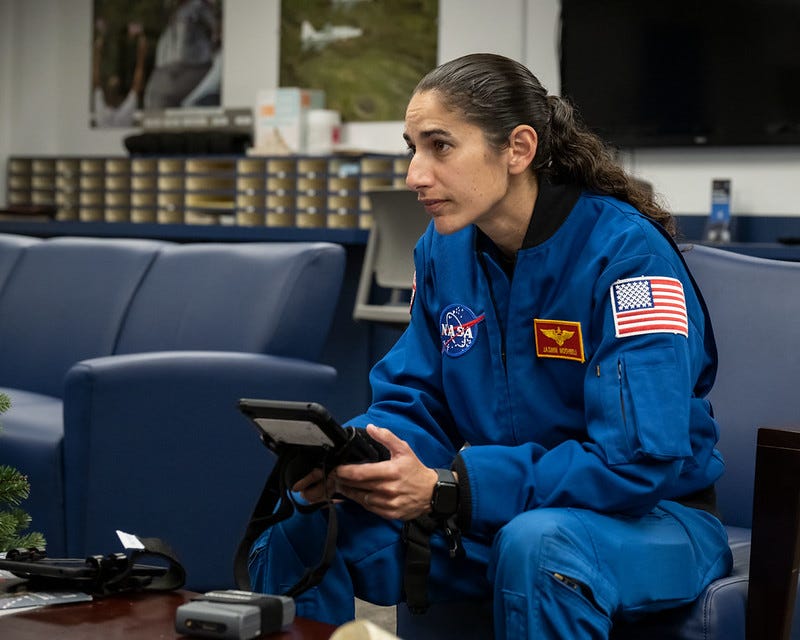
The Dark Horses:
The thing about astronauts is this: They all have unbelievable resumes. Moghbeli is a Marine, an MIT alum, and a test pilot — ultimately being selected for the command of SpaceX Crew-7. Barron was a submariner in the Navy and mission specialist of SpaceX Crew-3. Cardman is a geobiologist who spent time studying in Antarctica and was the commander of SpaceX Crew-11.
All three are eligible for selection and bring fascinating skill sets to a potential moon landing. But all three are also relatively junior, and would thus be a bit surprising to make the cut. Again, every single person on this list is amazing by dint of being an astronaut; we’re really picking nits.
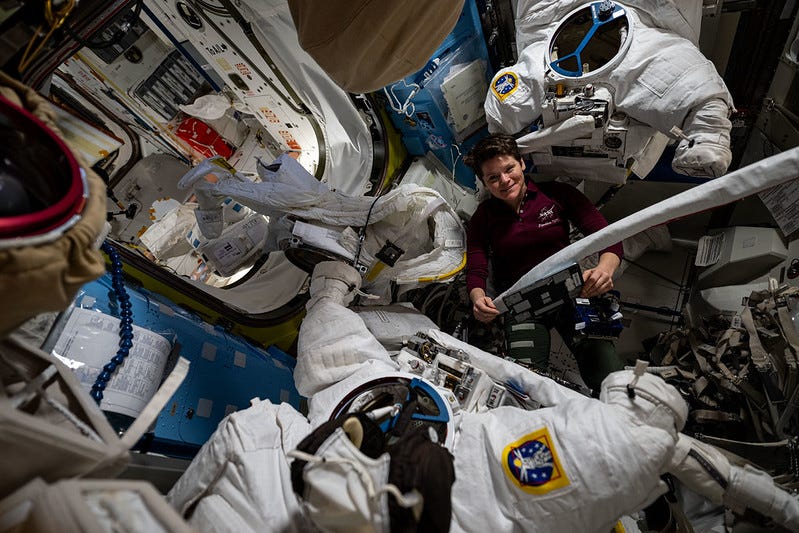
The SpaceX Crew-10 Crew:
Let’s start with Ayers, who is among the younger options on this list and one of the most recent astronaut candidates, being selected in NASA’s 23rd group in 2021. A Lieutenant Colonel in the Air Force, Ayers has an extensive resume as a pilot and flight instructor, a mathematician, and the pilot of SpaceX Crew-10 and on station for Expedition 72/73 — her first spaceflight.
The Commander of SpaceX Crew-10 was Anne McClain, an Army helicopter pilot, an engineer, and an astronaut with a total of over 351 days in space.
Both McClain and Ayers are extraordinarily accomplished, as all astronauts are, but I also think neither is likely to make the cut for Artemis IV. Ayers is relatively junior as far as astronauts go. Though she was a major part of Artemis II coverage, which seems notable to me, it seems likely the crew assignment will value seniority in some capacity.
Thanks for reading J Mission! This post is public so feel free to share it.
McClain was subject to a bizarre and ultimately false accusation of fraud while serving aboard the International Space Station, which had the effect both of doxxing her as well as outing her as the third known LGBT astronaut. None of that is her fault, and it’s unfortunate to have to talk about this stuff, but it seems likely that would preclude her from being first in this environment. It doesn’t mean she won’t land on the moon, but I don’t think this administration will select her to be first.

It’s Fun to Dream:
At 56 and 59, respectively, Caldwell Dyson and Wilson would each be the oldest person to walk on the moon, if selected for Artemis IV. That’s not automatically disqualifying, however. Suni Williams was 59 when she performed an EVA during Expedition 72. Peggy Whitson was 65 years old aboard Axiom 4. It’s not unheard of.
Caldwell Dyson last flew aboard Soyuz MS-25 for Expedition 70-71 in 2024, while Wilson’s last flight was STS-131. Yes, STS — meaning she last flew to space as a Mission Specialist aboard Space Shuttle Discovery in 2010. But yes, she’s still active and eligible for crew selection on Artemis IV.
Both have an interesting case to make. Caldwell Dyson is a PhD-level chemist with over a year in space and nearly an entire day in EVA time. Wilson’s time in space was more limited, but she flew three times for a total of just over a month — and was CAPCOM during the first all-female spacewalk featuring two women who will feature further down this list.
But their case goes beyond experience and stats.
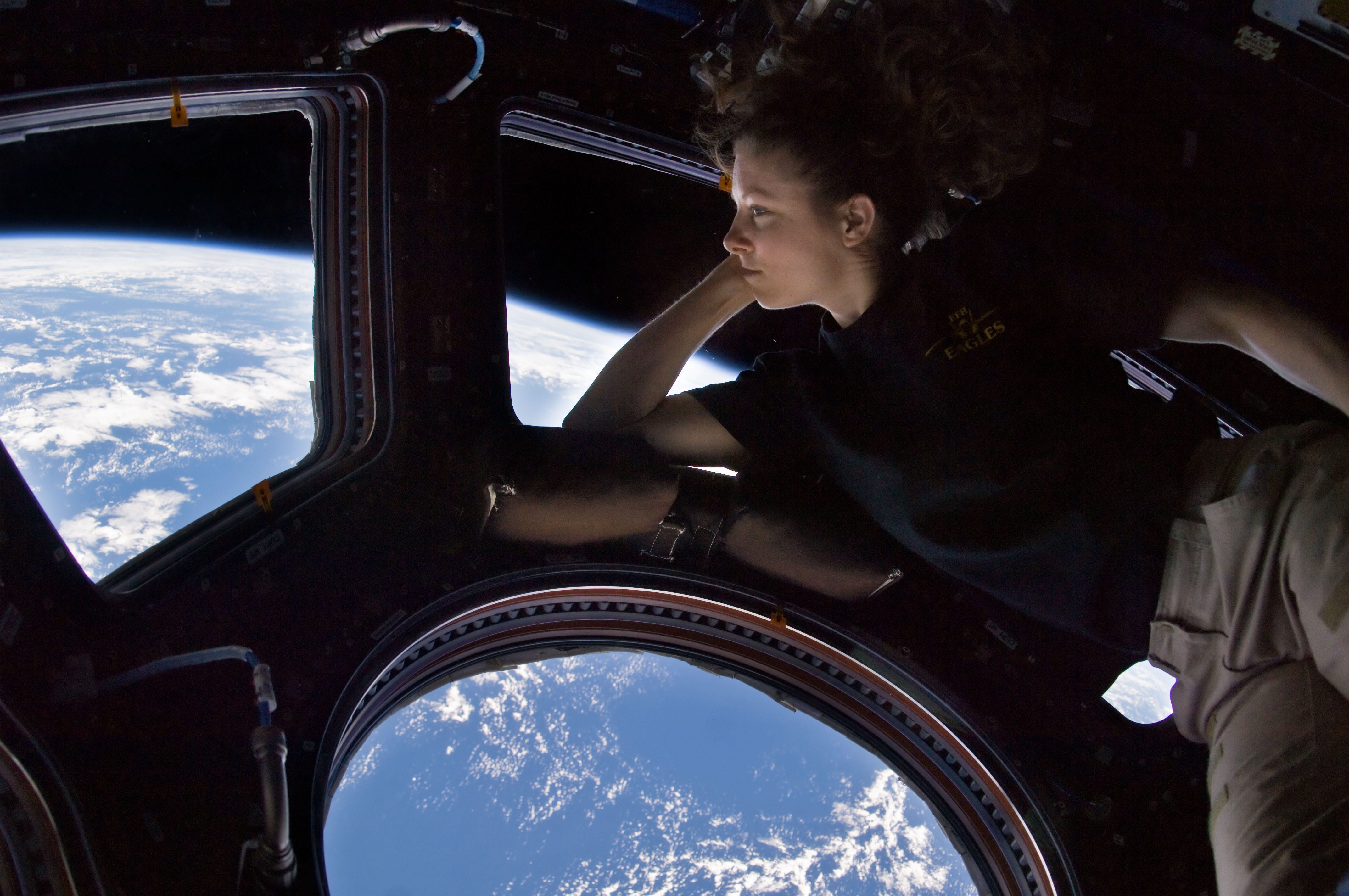
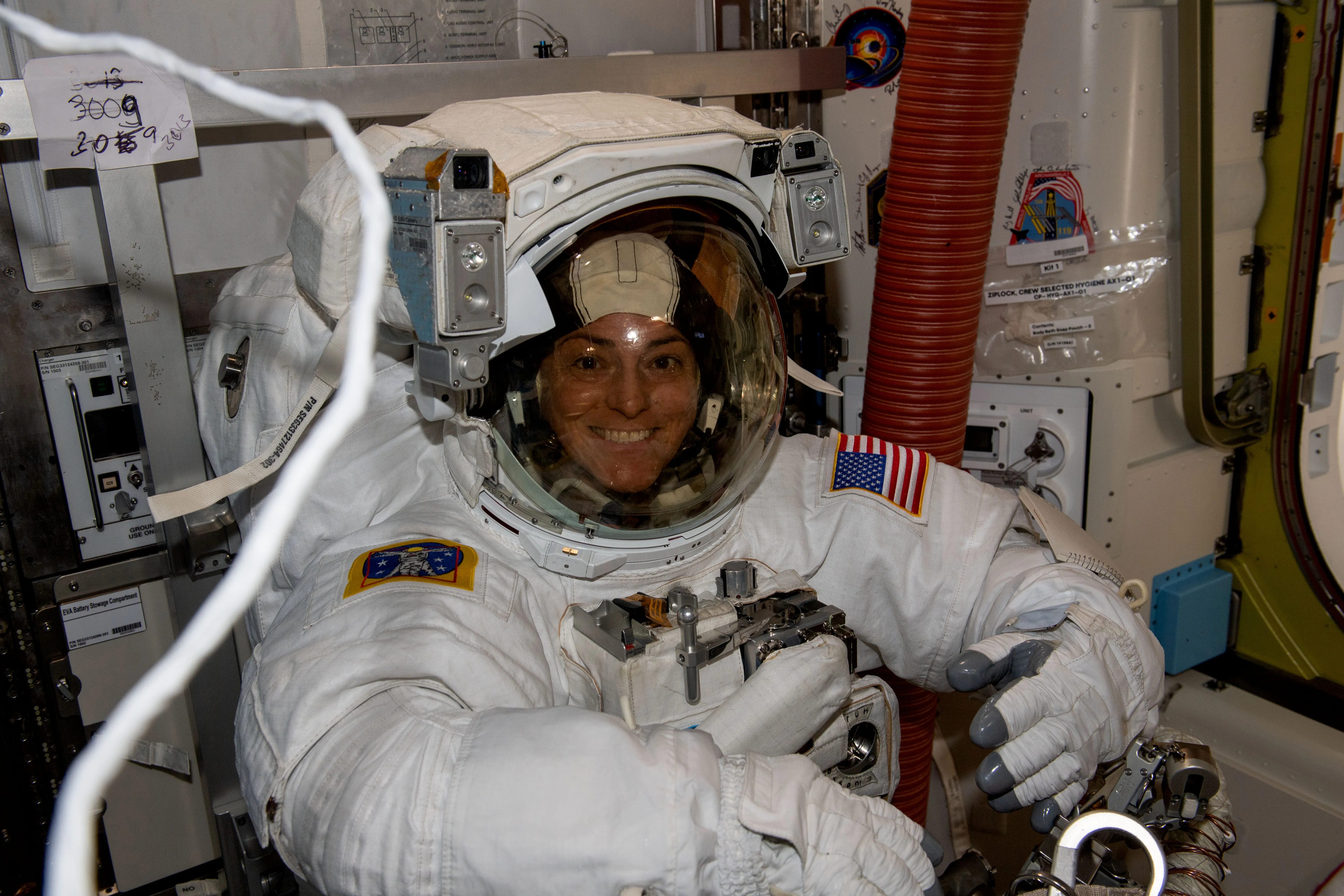
Caldwell Dyson has a fair amount of pop cultural cachet — a fixture on NASA TV as well as in various other television shows. Moreover, she’s the star of one of the most iconic photos in modern NASA history:
Wilson was the second African American woman to fly to space, and if selected to land with Artemis IV, could potentially also be the first person of color on the lunar surface.
Just personally, it would be awesome if the first woman on the moon also flew aboard the Space Shuttle — linking NASA’s past and future.
The Favorites:
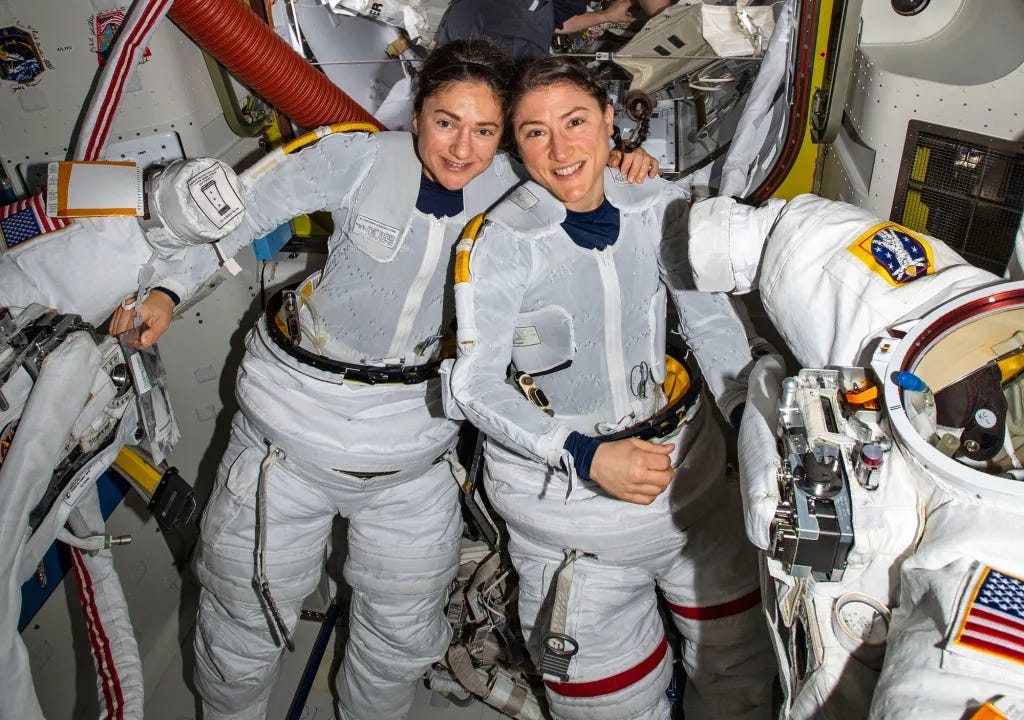
Let’s start with Koch. You probably know all the important parts of her resume by now: An engineer, an Antarctica alum, one half of the first all-female spacewalk, almost a year in space, and the first woman to leave Earth’s orbit. It’s a resume that ensures her name will be in history textbooks regardless of any future crew selections. More than that, she was a key part of the Artemis II crew that installed itself in the hearts of everyone watching.
Then there’s Meir, forever linked with Koch as the other half of that all-female spacewalk. Her resume is particularly impressive even for an astronaut. She’s a PhD; she’s a marine biologist; she’s an astronaut with 327 days in space and 28 hours of EVA time. She also happened to be aboard the ISS while Koch was flying to the moon aboard Artemis II — continuing their cosmic link through the capsule-to-station call during that mission.
Watkins’ candidacy is extremely compelling. A PhD geologist with 170 days in space, flying with SpaceX Crew-4 for Expedition 67/68. Much of her focus in her early NASA career was Mars, but you would certainly think a geologist would get a fast-track to the lunar surface. And were she to land, she would also be the first African American to walk on the moon.
And lastly, there’s Mann. A Naval aviator and test pilot, Mann was selected as part of NASA Astronaut Group 21 alongside many of the women on this list. With just 157 days in space and only one flight, she has less NASA experience than some others. But she is also the first Native American woman in space, and was the first female commander of a commercial crew launch.
Now, we’re in full-on tea leaf reading mode, and it’s very, very likely I’m wrong. But Koch, obviously, already flew an Artemis mission, and it seems unlikely they’d refly someone when there are so many astronauts waiting in the wings. Yes, NASA did this with Apollo, but the pool was smaller, the tech was more specialized, and the culture was quite different. I think a lot of people would like to see her be the first woman on the moon, but I also think people will feel that way about everyone on this list once they get to know them.
That leaves Meir, Watkins, and Mann — and if I were a betting man, I’d take those three over the field.
But if I had to pick today, I’d guess Meir. I don’t think you can ignore that her EVA partner has already flown to the moon, and I also don’t think you can discount the significant amount of experience she has in space and in spacewalking. And her not being selected for Artemis III is interesting in itself, even if she has a good excuse (what with her not being on the planet right now).
Ultimately, it’s impossible not to construct a narrative around these things. Meir and Koch were linked in history through that first spacewalk, and then through their capsule-to-station call. It would be fitting for them to be linked through the moon itself — one the first woman to fly to it, and the other the first to set foot on it.
Is it possible politics is such that the child of immigrants, one Israeli and one Swedish, can’t be the first woman on the moon? Maybe. I hope not, but the world is different today than it was even a few years ago when Artemis II’s crew was selected.
But who knows? What matters is that we’re rapidly approaching the day this will happen. And more importantly, you almost certainly read the name of the first woman to walk on the moon in this article.
Neat, right?
Originally published on Substack ↗ · Subscribe to J Mission